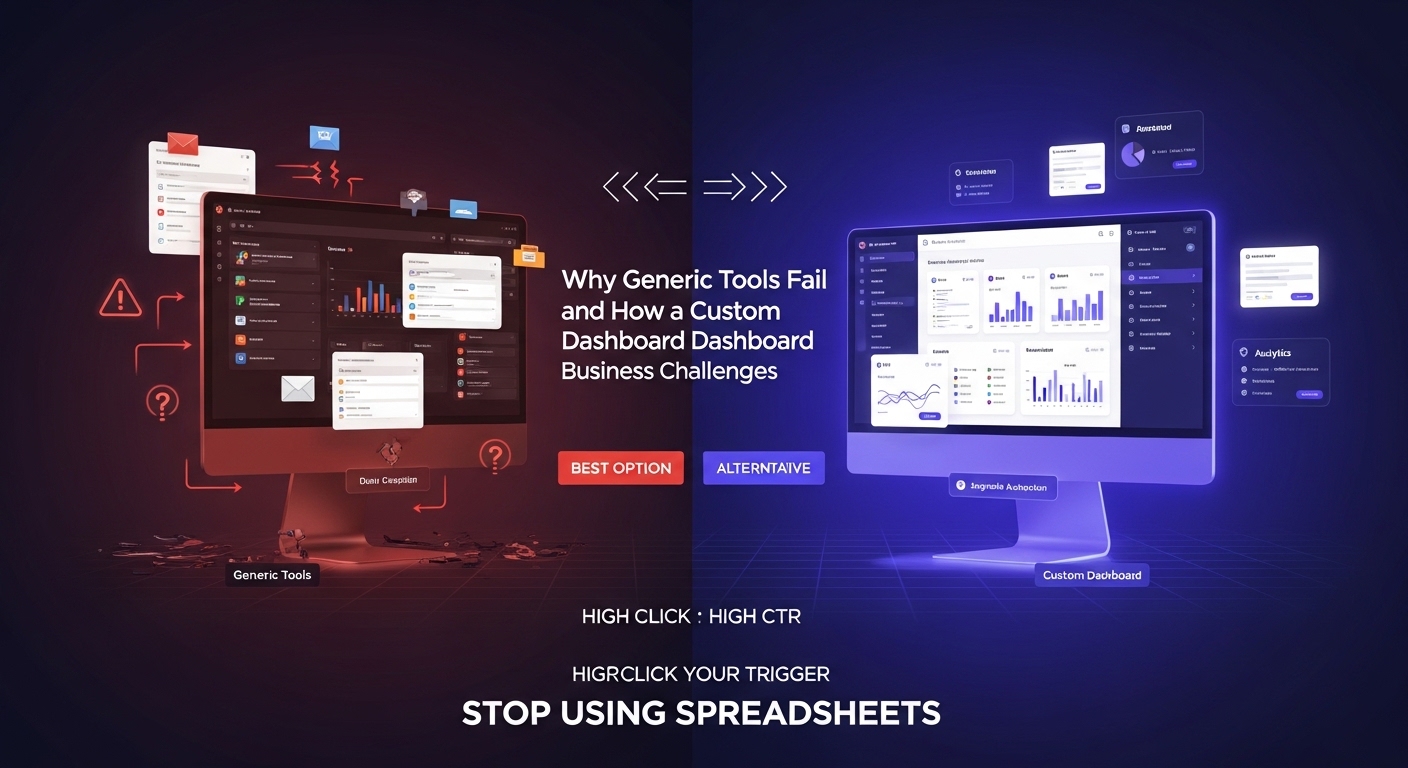
Why Generic Tools Fail and How a Custom Dashboard Solves Business Challenges
Introduction
Many businesses start managing their operations using ready-made tools such as spreadsheets, basic CRM systems, or standard analytics platforms. While these tools are useful in the early stages, they often struggle to keep up as business needs become more complex.
As companies grow, they require systems that match their workflows, integrate with multiple tools, and provide clear insights. Generic solutions are designed for a broad audience, which means they may not fully align with specific business processes. This gap can lead to inefficiencies, data confusion, and slower decision-making.
A custom dashboard addresses these challenges by offering a tailored solution. Built using modern technologies like React, Next.js, and databases such as MongoDB, custom dashboards allow businesses to manage data in a way that fits their exact requirements.
This article explores why generic tools often fall short and how custom dashboards can solve real business problems.
Table of Contents
- What Are Generic Business Tools?
- Common Limitations of Generic Tools
- Real Business Challenges Without Customization
- Why Businesses Need Tailored Solutions
- How Custom Dashboards Solve These Problems
- Key Benefits of Custom Dashboards
- Real Business Example
- Practical Tips for Transitioning to a Custom Dashboard
- Frequently Asked Questions
- About Saini Studio
- Conclusion
What Are Generic Business Tools?
Generic business tools are software solutions designed to serve a wide range of users. Examples include spreadsheets, basic project management tools, and standard analytics platforms.
These tools typically offer:
- pre-defined features
- fixed workflows
- limited customization options
- general-purpose functionality
While they can be useful for basic operations, they may not meet the needs of businesses with specific processes or advanced requirements.
Common Limitations of Generic Tools
As businesses expand, the limitations of generic tools become more noticeable.
Limited Customization
Generic tools often restrict how data is displayed and managed.
Fragmented Data
Information may be spread across multiple platforms, making it difficult to get a complete view.
Inefficient Workflows
Pre-built systems may not match the way a business operates.
Scalability Issues
As data grows, generic tools may struggle to handle increased complexity.
These limitations can slow down operations and reduce overall efficiency.
Real Business Challenges Without Customization
Businesses that rely only on generic tools often face several practical challenges.
Data Confusion
When data is stored in different tools, it becomes harder to maintain accuracy and consistency.
Time-Consuming Processes
Teams may spend extra time switching between systems and compiling reports manually.
Lack of Insights
Without proper data visualization, it can be difficult to identify trends and patterns.
Reduced Productivity
Employees may focus more on managing tools rather than completing meaningful tasks.
These challenges highlight the need for more tailored solutions.
Why Businesses Need Tailored Solutions
Every business operates differently, with unique goals, processes, and data requirements.
Alignment With Business Goals
Custom solutions are built to support specific objectives.
Flexible Workflows
Businesses can design systems that match their operations.
Better Integration
Custom dashboards can connect with existing tools and databases.
Long-Term Scalability
Tailored systems can grow as the business expands.
Customization allows businesses to move beyond limitations and create more efficient systems.
How Custom Dashboards Solve These Problems
Custom dashboards are designed to address the challenges created by generic tools.
Centralized Data Management
All important data is displayed in one place, reducing confusion.
Custom Features
Businesses can include only the features they need.
Real-Time Insights
Dashboards provide up-to-date information for better decision-making.
Streamlined Workflows
Processes are optimized to match business operations.
By providing a unified and flexible system, custom dashboards improve efficiency and clarity.
Key Benefits of Custom Dashboards
Custom dashboards offer several important advantages.
Improved Efficiency
Automation reduces manual work and saves time.
Better Decision-Making
Clear data visualization helps businesses understand performance.
Enhanced Productivity
Teams can focus on tasks instead of managing tools.
Scalable Systems
Dashboards can adapt to changing business needs.
These benefits make custom dashboards a valuable investment for growing businesses.
Real Business Example
Consider a company that manages customer data, sales performance, and marketing campaigns using separate tools. The team spends significant time compiling reports and analyzing data.
After implementing a custom dashboard, all information is integrated into one system. Managers can view performance metrics in real time, and teams can access the data they need without switching between platforms.
As a result, the company improves efficiency, reduces manual work, and makes faster decisions based on accurate data.
Practical Tips for Transitioning to a Custom Dashboard
1. Identify Business Pain Points
Understand the limitations of your current tools.
2. Define Clear Requirements
Decide what features and data you need.
3. Prioritize User Experience
Design dashboards that are easy to use.
4. Plan for Integration
Ensure the dashboard connects with existing systems.
5. Work With Experienced Developers
Professional development ensures better results.
These steps help businesses transition smoothly to a custom solution.
Frequently Asked Questions
Why do generic tools fail for growing businesses?
They often lack customization and cannot handle complex workflows.
What is a custom dashboard?
It is a tailored system that displays and manages business data based on specific needs.
Are custom dashboards scalable?
Yes, they can be expanded as the business grows.
Do custom dashboards improve productivity?
They reduce manual work and help teams access information more efficiently.
About Saini Studio
Saini Studio is a digital agency specializing in custom dashboards and modern web solutions for businesses. The focus is on building scalable, performance-driven systems that solve real operational challenges.
Services include:
- custom dashboard development
- full-stack website development
- performance optimization
- scalable architecture design
- business automation tools
Saini Studio works closely with businesses to understand their challenges and develop solutions tailored to their workflows.
If you are facing limitations with generic tools and planning to build a custom dashboard, you can contact Saini Studio to explore solutions designed for your business needs.
Conclusion
Generic tools can be useful in the early stages of a business, but they often struggle to support growing and complex operations. Limitations such as fragmented data, inefficient workflows, and lack of customization can slow down progress.
Custom dashboards provide a solution by offering centralized data, tailored features, and scalable systems. By addressing real business challenges, these dashboards help improve efficiency, productivity, and decision-making.
For businesses looking to overcome the limitations of generic tools, investing in a custom dashboard can be a practical and long-term solution.