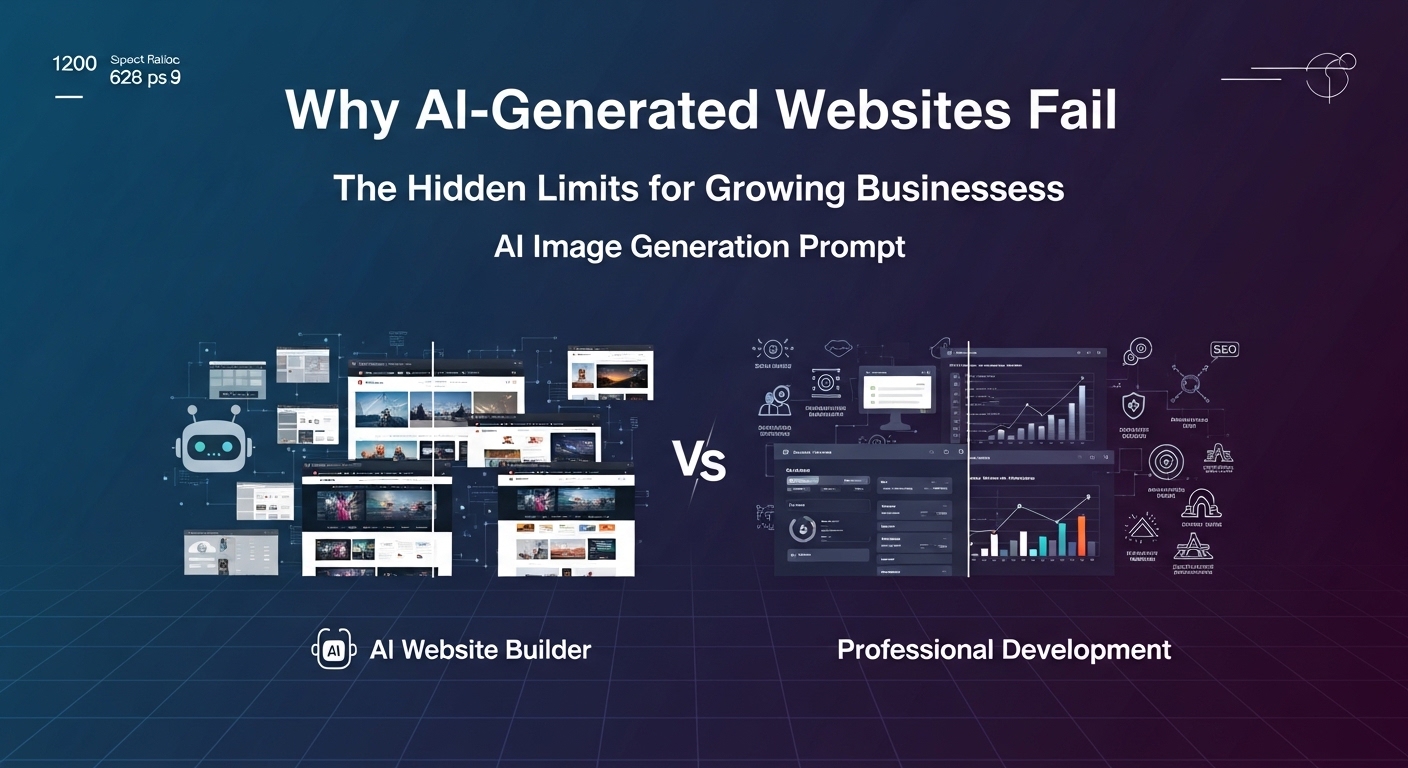
Why AI-Generated Websites Often Fail for Growing Businesses
Introduction
Artificial intelligence has transformed many areas of technology, including website creation. AI-powered website builders promise quick results, allowing users to generate a website within minutes using automated layouts and templates. For startups and small projects, this convenience can be appealing. However, many growing businesses eventually discover that AI-generated websites have limitations that become more noticeable as the business expands.
A website is more than a digital placeholder. It acts as a communication platform, a marketing tool, and often the primary place where potential customers evaluate a business. While AI tools can generate websites quickly, they often rely on predefined templates and automated design systems that limit customization, scalability, and technical flexibility.
Businesses planning long-term digital growth should understand the differences between automated website generation and structured development. This article explores why AI-generated websites may not always meet the needs of growing companies and what factors businesses should consider before choosing a website solution.
Table of Contents
- What Are AI-Generated Websites?
- Why Many Businesses Start With AI Website Builders
- Scalability Challenges for Growing Businesses
- SEO Limitations in Automated Website Builders
- Security Considerations
- Generic Design and Brand Differentiation
- Real Business Example
- Practical Tips Before Choosing a Website Solution
- Frequently Asked Questions
- About Saini Studio
- Conclusion
What Are AI-Generated Websites?
AI-generated websites are created using automated tools that build web pages based on user input. Instead of manually designing and coding the site, the platform uses algorithms to select templates, generate layouts, and place content automatically.
Many website builders offer AI features that simplify the process for beginners. Platforms such as Wix or Squarespace provide tools that can generate a website structure within minutes. Users typically answer a few questions about their business, and the system produces a ready-to-edit website layout.
These tools reduce the technical complexity of building a website. However, the automated nature of these systems can create limitations when businesses require more advanced functionality.
Why Many Businesses Start With AI Website Builders
AI website builders have become popular because they offer several conveniences.
Fast Setup
Many AI tools can generate a basic website structure within minutes. This allows businesses to publish a simple website quickly.
Minimal Technical Knowledge Required
Automated platforms often provide drag-and-drop editing, making it easier for users without coding experience to update content.
Pre-Designed Templates
AI systems rely on design templates that simplify the layout process and provide a starting point for beginners.
While these features make AI website builders accessible, they may not always meet the requirements of businesses that expect their websites to evolve over time.
Scalability Challenges for Growing Businesses
As businesses expand, their websites often require additional features and integrations. AI-generated websites may struggle to accommodate these changes.
Common scalability challenges include:
- Difficulty adding advanced functionality
- Limited flexibility in database or system integrations
- Restrictions in customizing website architecture
- Performance limitations as traffic increases
Growing companies often require features such as customer dashboards, advanced forms, custom workflows, or integration with marketing tools. Automated website builders may not provide the flexibility needed for these complex requirements.
SEO Limitations in Automated Website Builders
Search engine visibility plays a significant role in how businesses attract visitors online. Websites designed with SEO structure in mind are easier for search engines to understand and index.
However, some AI-generated websites have structural limitations that affect SEO performance.
Limited Control Over Technical Structure
Automated platforms may restrict customization of URLs, metadata, and page hierarchy.
Performance Constraints
Some AI websites include extra scripts or template elements that can affect page speed.
Content Structure Challenges
Search engines rely on clear page organization and heading structures. Automated layouts may not always provide optimal content organization.
While some AI platforms offer SEO tools, growing businesses often require deeper control over website structure and optimization.
Security Considerations
Website security is another important factor when choosing a development approach. Businesses must ensure that their websites protect both company data and user information.
Automated website builders typically provide basic security features. However, businesses that require advanced security configurations may find limited customization options.
Professional development allows greater control over:
- authentication systems
- data protection mechanisms
- server configurations
- security monitoring tools
These measures can be important for businesses handling sensitive customer information or operating in competitive digital environments.
Generic Design and Brand Differentiation
Brand identity is an important part of building trust with customers. Websites created through automated systems often rely on pre-built design templates that may be used by many other businesses.
While templates can provide a quick starting point, they may limit a company’s ability to create a unique digital identity.
Common design challenges include:
- similar layouts across many websites
- limited customization of design components
- restrictions on advanced user interface features
For businesses aiming to stand out in competitive industries, custom design and structured development can provide greater flexibility.
Real Business Example
Consider a consulting company that launches its first website using an AI website builder. The automated tool helps the business create a simple website quickly, which initially works well for basic information pages.
As the company grows, it begins publishing more content and running marketing campaigns. The business also wants to integrate advanced analytics and lead management tools.
At this stage, the limitations of the automated website platform become more noticeable. The company eventually transitions to a professionally developed website that allows better performance optimization, flexible integrations, and customized design.
This transition helps the business create a website that supports its expanding marketing strategy and customer engagement efforts.
Practical Tips Before Choosing a Website Solution
Define Your Website Goals
Understand whether the website is intended for simple information sharing or long-term marketing and growth.
Consider Future Expansion
Choose technologies that allow new features to be added without rebuilding the entire website.
Evaluate Customization Needs
Businesses that require unique functionality may benefit from structured development rather than automated systems.
Focus on Performance
Fast loading speed and smooth user experience improve visitor engagement.
Seek Professional Guidance
Experienced developers can help determine the most suitable technologies for a business website.
Frequently Asked Questions
Are AI website builders suitable for businesses?
AI website builders can be useful for simple websites or early-stage projects, but growing businesses often require more flexibility.
Can AI-generated websites support SEO?
Some AI platforms provide basic SEO tools, but advanced optimization may require greater technical control.
When should businesses consider custom development?
Businesses that expect growth, advanced features, or unique design requirements often benefit from custom development.
Are AI websites always limited?
Not necessarily. However, businesses should evaluate whether the platform supports their long-term digital strategy.
About Saini Studio
Saini Studio is a digital creative agency that focuses on building modern, performance-driven websites for businesses. The team works with companies to plan and develop websites that combine professional design with structured development strategies.
At Saini Studio, website projects typically focus on:
- strategic planning before development
- performance-focused website architecture
- responsive design for mobile and desktop devices
- scalable technology frameworks
- SEO-friendly website structures
By combining design, technology, and digital strategy, Saini Studio aims to create websites that support long-term business growth.
Conclusion
AI-generated websites offer a convenient way to launch a simple online presence quickly. However, growing businesses often require more flexibility, performance optimization, and customization than automated systems can provide.
Understanding potential challenges such as scalability limitations, SEO constraints, security considerations, and generic design structures helps businesses make more informed decisions when choosing a website solution.
A well-planned website built on the right technology foundation can support marketing efforts, improve user experience, and adapt to future growth. For businesses planning long-term digital success, careful planning before choosing a website platform is essential.